

The Flame of a Patio Heater Gas Flame
The flame of a patio heater's gas flame creates an ambient spectacle that is enthralling and captivating at night, especially in darkness. These heaters are portable and can be moved around the area you want to heat.
They could, however, be blown over by wind gusts (check out our guide on how to stop patio heaters from falling over). Keep a fire extinguisher at hand to prevent any accidents.
Warmth
A patio heater is the most important element to creating a larger outdoor seating and dining space. A halogen gas fire on top of the unit radiates warmth that counteracts the cool night air and creates a cozy focal point for guests to gather around. Patio heaters can be moved around the table unlike fire pits in outdoor areas which are fixed to one location and require an open flame.
black gas patio heater utilize lamps to create an ignition, while others rely on a burner made of metal to heat a screen which reflect infrared light and emits warmth. The screen is usually silvered to prevent overheating the skin and reducing the amount heat lost through conduction. Certain models also come with a perforated hood that helps to disperse the radiant heat and decrease the amount of direct heat.
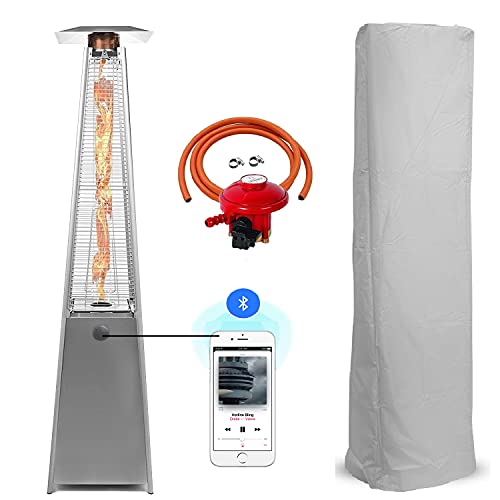
There are three types of pedestals: standing, and hanging. The latter two kinds are suitable for large spaces, while the first one is ideal for smaller spaces, such as under a pergola or trellis. Some models include an electric ignitor, while others require the pilot light to be lit manually with a long match or grill lighter. If the pilot light does not remain lit, switch off the unit and try it again within five minutes. This will prevent gas accumulation which could lead to an explosion.
Find a model that has a thermocouple that detects the presence of a fire and will stop the flow of propane if no flame is detected. This is a vital safety feature for any gas patio heater. Make sure that your model has no open flame, and also has a shut-off valve to prevent the tank from being completely empty in the event that the nozzle is accidentally disconnected or shut off.
To prevent tipping, place your heater on a level surface like concrete or bricks. Also, ensure that it has a weighed base to ensure its stability. Always keep a fire-extinguisher near and apply a soapy solution to the connecting points of the gas cylinder frequently to detect leaks. A leaky connection could release dangerous levels of carbon monoxide so it's a good idea to keep an eye out for a foul smell and be ready to act if you notice any.
Atmosphere
In addition to providing warmth, a patio heater gas flame creates a mesmerizing glow that adds ambiance and a sophisticated atmosphere. Freestanding towers are commonly used in both outdoor residential and commercial spaces.
Some models have a ceramic-based fascia that is radiant, while others employ a burner that has reflective metal to produce light and heat. Some models feature an automatic tip over switch that will shut off the gas supply in the event that the unit tips. Some have wheels as well as an area to store propane tanks. They are designed to withstand rain, snow and winds without rusting.
In contrast to ceiling or wall mounted natural gas or liquid propane gas (LP) heaters, these mobile units can be easily accessed propane tank fuel sources which makes them the ideal option for outdoor patios, in which floor space is restricted. These heaters are relatively inexpensive and can provide heat in every direction. black gas patio heater for heating up tables. Some can be placed on balconies and decks or even in the pool.
If you're operating a Michelin-starred or fine dining establishment, the aesthetic appeal of your outdoor space is just as important as the quality of your food. These fashionable pyramid-shaped patio heaters offer an eye-catching centerpiece to the outdoor dining area of your restaurant, helping you create a sophisticated ambience that distinguishes you from the less expensive restaurants.
The glowing yellow or orange flame of a patio heater gas flame draws people's attention and serves as an elegant focal point for social gatherings. These attractive heaters can be used to break the ice at a summer party at your workplace or networking event. They can be used in outdoor spaces that are covered, too, to minimize the loss of heat when the sun sets and you need to shut down your event or move indoors. You can also use them to market unused patio spaces at your event or business venue, which can be a great extra source of income.
Durability
Unlike wood-burning fire pits, flame patio heaters don't create smoke or soot and are safe to use in enclosed spaces like sunrooms or porches with screens. They are also more durable and provide an increased amount of heat for a longer amount of time than fire pits. These features make them ideal for businesses and restaurants who require outdoor space year-round.
Choose between electric and propane models. Both models provide constant heat for up to five hours per charge. Both models include a variety of attractive design features and safety features like tip-over protection and an erect base. Electric models are easy to install and don't require an propane tank. Propane models are less convenient because you need to store and replace propane tanks. However, they generally provide more heat and last for up to 15 hours on a single tank.
The most common kind of patio heater is one that has an electric burner on the top of a pole. It burns natural gas or liquefied petroleum gas (LPG), or propane. It then is directed by an aluminum mesh that is perforated to create the flame effect. A patio heater with an infrared source produces energy to warm nearby people and objects, and the flames add an inviting ambience to any outdoor area.
Patio heaters come in a wide variety of styles and sizes including pyramid-style models that have fake flames or utilitarian models that fit under tables. Select models that are CSA, UL, or ETL certified. They should have an automatic shutoff and stable bases, as well as an safety feature to stop the flame from exploding over the unit. These units can be used as an accent piece in the backyard or on decks. They can also add an element of drama to restaurant or hotel terraces.
The most powerful and effective patio heaters utilize propane, as they generate the most heat over a longer period of time. They're also portable and usually have a weighted tank that allows them to remain in place and is easy to move. Propane heaters are more expensive to run than other kinds of heaters due to the fact that they consume a lot of fuel, and cannot be used inside without proper ventilation.
Safety
Patio heaters are becoming more common in restaurants and at homes. Gas-fired heaters that are free-standing can bring warmth and comfort to terraces and patios. However electric patio heater vs gas can also be hazardous. Natural Gas and Propane burners emit flammable fumes, and should only be used in ventilated spaces. Propane patio heaters should be kept at least three feet away from furniture, decorations that ignite, or awnings, and should be set on a flat, level surface.
The flame of a propane patio heater is visible, which could be a fire risk when pets or children are allowed to get too close. The heater should never be left unattended and children should be kept from it. A fire extinguisher should be kept close by to fight any accidental fires and prevent them from spreading. Regularly check the pilot tube, orifice and thermocouple for corrosion and other damage. Also, be aware of high winds that could blow a propane patio heater over or cause the flame to die.
It is crucial to follow the manufacturer's directions and guidelines regarding use and maintenance, whether you're using propane patio heaters or a natural gas patio heating system. Select a model that has an electronic ignition to allow lighting the pilot light simple and quick. If you must manually light your heater, do so only at a safe distance with a long lighter or match. Look for models that use thermocouples to shut off the propane supply when the flame is snuffed out or damaged, such as in the event of a violent gust of wind.
If you have children or pets, think about getting a propane patio heater that has an inner protective dome or glass tempered to completely cover the flame. This reduces the risk of burns from accidental sources and prevents pets and children from being too close to the flame, which could cause the fire to spread. Also, keep a fire extinguisher in your home and only use your heater in areas that are ventilated, especially when there are high winds.